How it works
Powder coating gives the most durable surface and the lowest environmental impact. The price is that the part must withstand the oven.
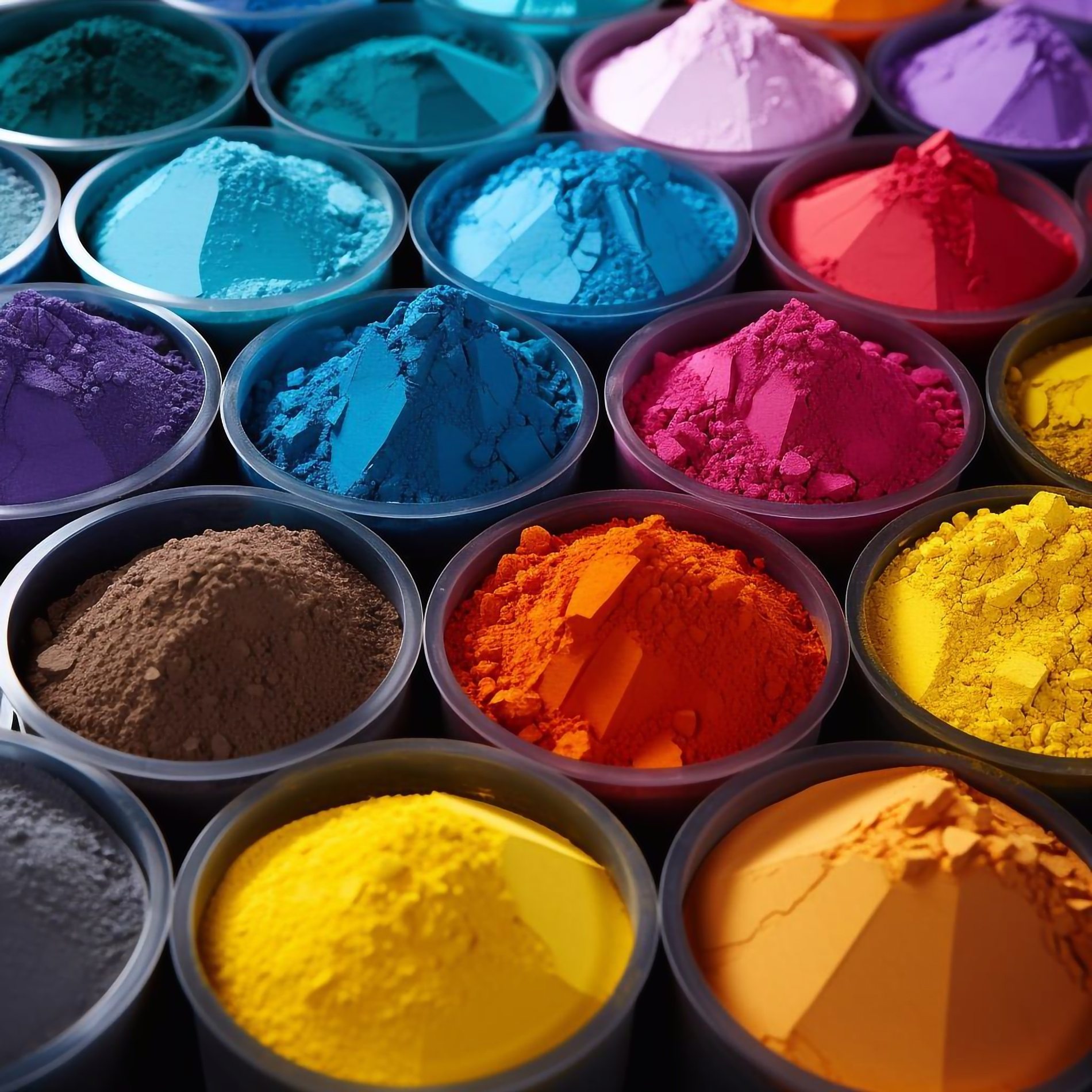
The powder is sprayed through a gun that gives it an electrical charge. The part is earthed, so the powder is attracted to it and stays in place without a binder. The part then goes into an oven, where the powder melts, flows out and cures into a continuous film.
Since no solvent is used, there are virtually no emissions, and powder that misses the part is extracted and returned to the system.
01
Pretreatment
Degreasing and chemical pretreatment of the sheet. This is where adhesion and corrosion protection are decided.
02
Application
Electrostatic spraying. The powder is drawn to the earthed surface and settles evenly.
03
Oven
The powder melts and cures. When the part comes out, it is ready to be packed.
Strengths and limitations
What the method does well
- A surface that resists impact, scratches and corrosion.
- Thicker layers in a single application step.
- No solvents, and the overspray is reused.
- Finished straight out of the oven, no drying area needed.
- Competitive price in ongoing series.
What counts against it
- The part must withstand around 200 degrees.
- Colour changes cost set-up time, so small, unusual series become more expensive.
- Difficult to achieve really thin layers or a deep high gloss.
- The surface must be conductive and capable of being earthed.
- Inside corners and deep grooves may get a thinner layer.
- On-site touch-ups are in practice done with wet paint.
Side by side
Wet paint or
powder coating?
The short answer: powder when the surface has to withstand a lot and the series is of some size, wet paint when the colour or the material makes special demands. The longer answer is here.
| Property | Wet paint | Powder coating |
|---|---|---|
| Material | Liquid paint, solvent-borne or water-borne. | Dry powder that is electrostatically charged. |
| Curing | Dries and cures at room temperature or with gentle heat. | Melts and cures in an oven. |
| Coating thickness | Approximately 40 to 80 µm, depending on the number of coats. | Approximately 60 to 100 µm. |
| Durability | Good, but the surface is softer and more sensitive to impact. | Harder surface, clearly better against impact and scratches. |
| Colour change | Quick. Change the paint in the cup and go. | Takes time. Booth and hose must be cleaned between colours. |
| Small series | Inexpensive. A single part in an unusual colour is no problem. | Relatively more expensive per part, since the set-up time is spread over fewer pieces. |
| Heat-sensitive | Works. Plastics, gaskets and assembled units cope fine. | Does not work. The oven is too hot for most things that are not metal. |
| Deep cavities | Reaches better into grooves and inside corners. | The charge seeks out outer surfaces, so inside corners may get a thinner layer. |
| Environment | Solvents require purification and ventilation. | No solvents, and excess powder can be reused. |
| On-site touch-up | Easy. Touch-up paint in the same colour works. | Difficult. Damage is in practice always repaired with wet paint. |
Part will not go in the oven?
If the material is heat-sensitive, already assembled or the colour particularly demanding, wet paint is the way to go.